

Aggression & fight detection
A fight breaks out, security knows first. Aggression and fight detection flags physical altercations the moment they start, so a response can begin in real time instead of after footage is reviewed.
- Rapid, aggressive multi-person body movement consistent with…
- Sustained pushing, striking, or grappling between confirmed…
- Escalating confrontations in queues, entrances, and common areas
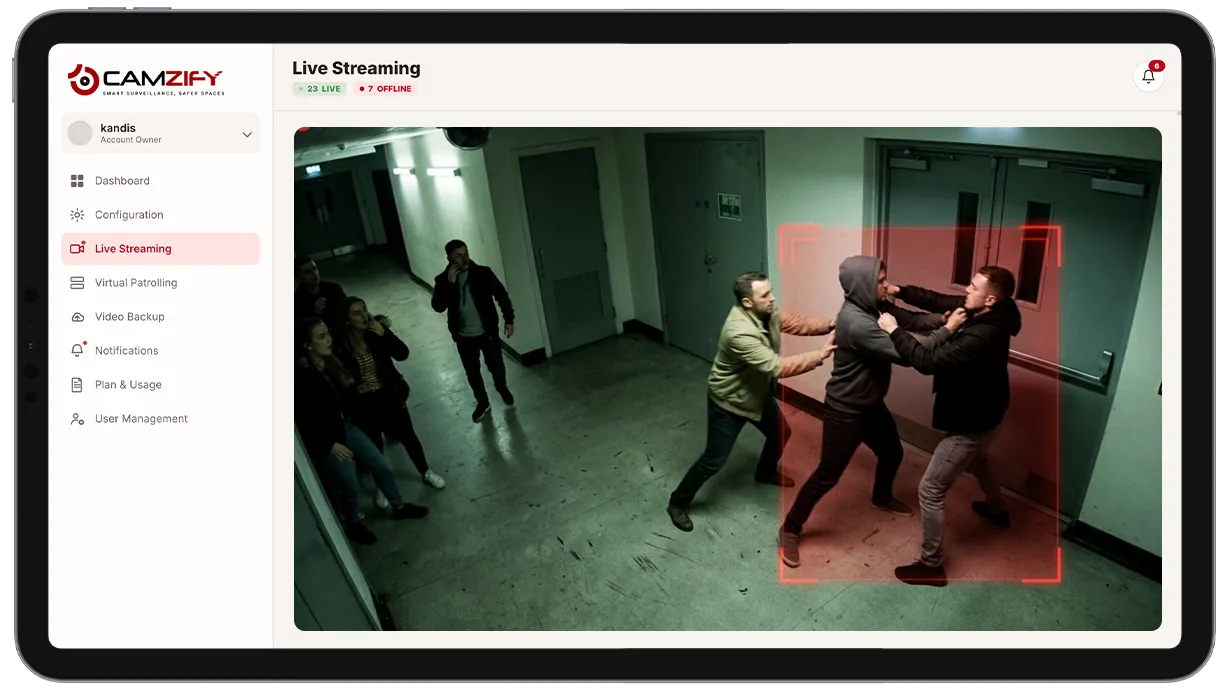
This capability detects and alerts on:
- • Rapid, aggressive multi-person body movement consistent with a physical altercation
- • Sustained pushing, striking, or grappling between confirmed subjects
- • Escalating confrontations in queues, entrances, and common areas
- • Immediate, prioritized alert routing to the nearest available guard
- • Altercations involving three or more people in the same tracked event
- • Repeated aggressive incidents at the same location within a short window
Why aggression and fight detection matters
A physical altercation can go from first shove to serious injury in seconds, far faster than a guard on patrol or watching a bank of monitors is likely to notice, intervene, or even know it's happening at all. By the time someone reports it or a supervisor reviews the footage afterward, the incident is already over and the only value left is documentation.
Relying on people nearby to call for help has the same gap: bystanders often hesitate, and staff aren't always positioned to see the moment it starts. Fixed motion alarms don't help either, since a fight looks like ordinary movement to a system that can't distinguish aggressive contact from a crowd milling around.
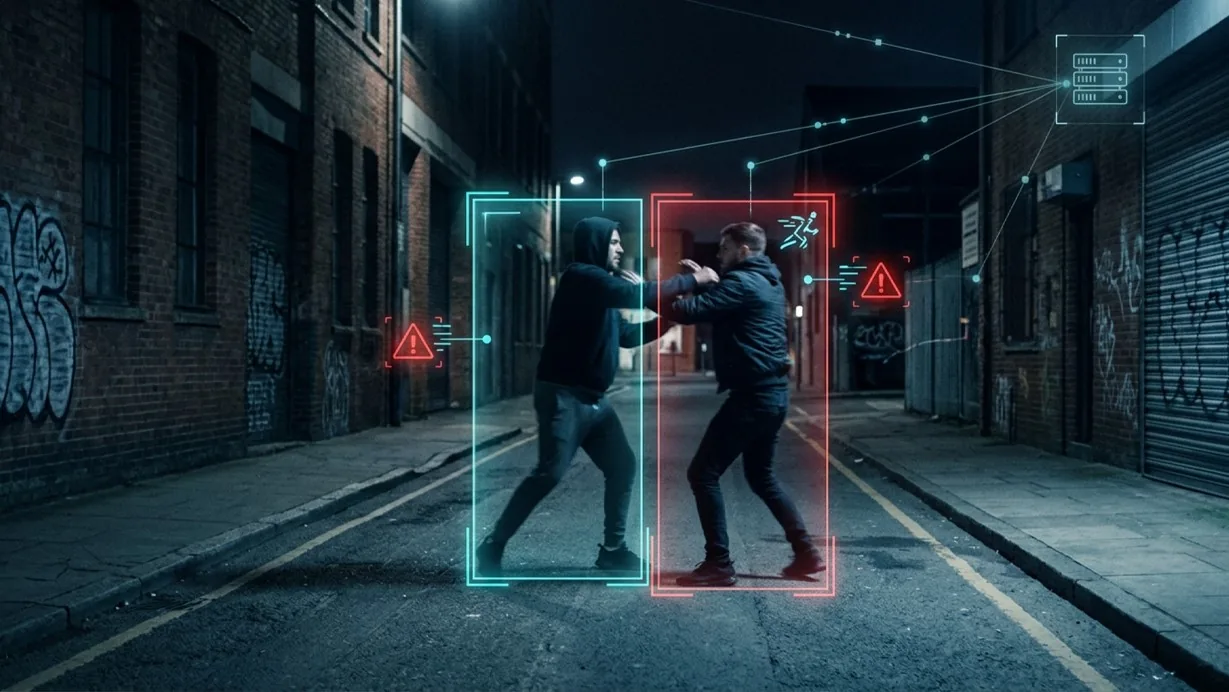
Aggression and fight detection watches for the specific motion pattern of a physical altercation, rapid, sustained, aggressive movement between tracked individuals, and fires the alert while the incident is still unfolding, giving security the chance to respond in real time rather than reconstruct events afterward.
How it works
Reading relative motion
Built on top of multi-object tracking, the model evaluates the relative motion and proximity between tracked subjects over a short time window rather than reacting to overall scene activity.
Confirming a sustained pattern
A sustained aggressive-movement pattern between two or more people crosses the alert threshold. Every alert includes a clip covering the moments before and during the event, along with confidence score and timestamp, so the reviewing guard has full context immediately.
Alert delivery
Alerts route through the platform's notification system with critical-severity defaults and configurable escalation.
Configuration
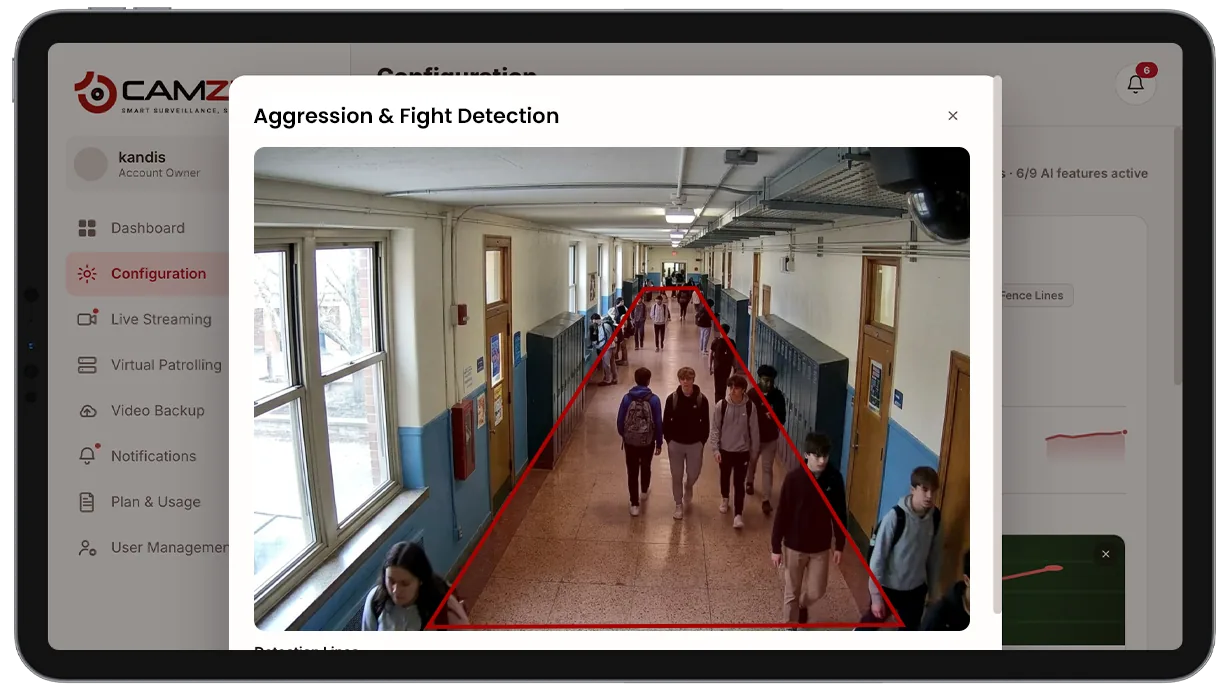
Aggression and fight detection is enabled per camera with default critical-severity alerting. Configuration options include:
- • Per-camera enablement with critical-severity alerting by default
- • Sensitivity tuning for the sustained-movement threshold
- • Notification window per camera for areas with time-limited monitoring needs
- • Escalation contacts and routing rules per site
- • Per-camera instance licensing, matching other detection features
Common scenarios
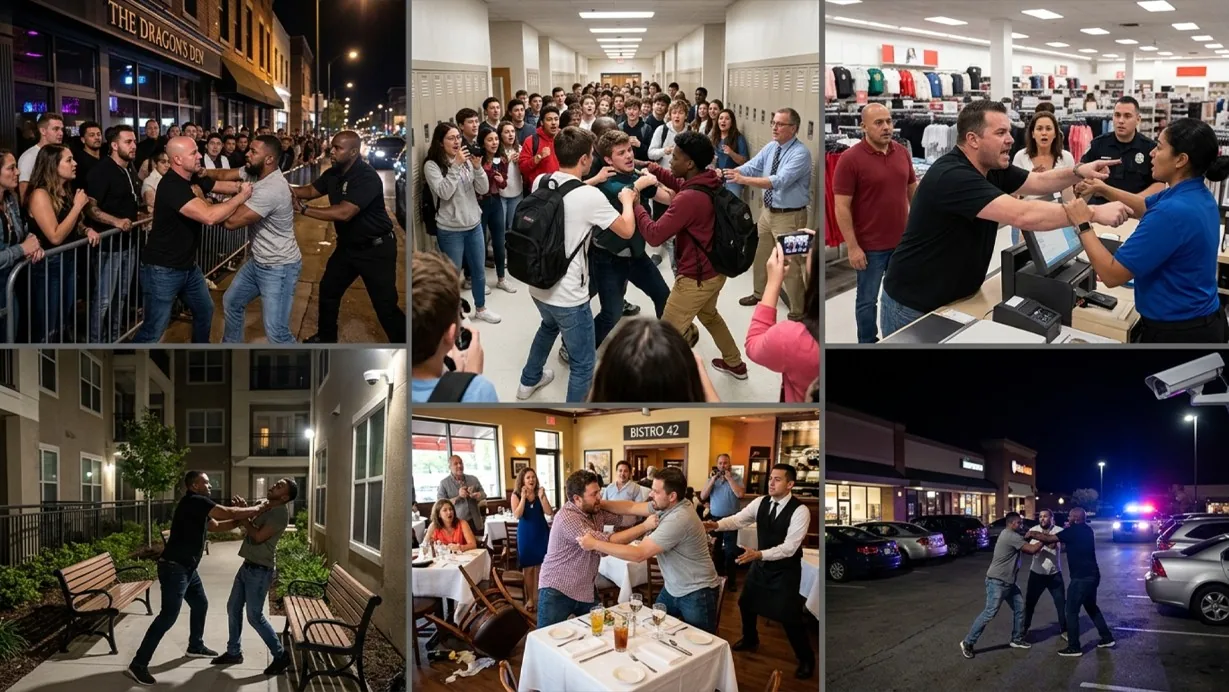
- • A queue outside a nightclub or bar where a confrontation escalates into a physical altercation
- • A school hallway or courtyard where a fight breaks out between students during a change of class
- • A retail store checkout area where a dispute over a return turns physical
- • A residential common area where an altercation between residents triggers an immediate alert
- • A restaurant dining area where a confrontation between patrons escalates quickly
- • A parking lot at night where an altercation is flagged alongside a nearby weapons detection alert
In a patrol round
Aggression detection runs continuously rather than only during scheduled checks, but an event during an active virtual patrol round is logged immediately as a critical non-compliance event in the patrol report.
Industries using this
Related detections
Use cases
Frequently asked questions
Ready to patrol your site 24/7?
Book a 15-minute demo and see a live patrol run on your own cameras.