

Virtual patrolling system
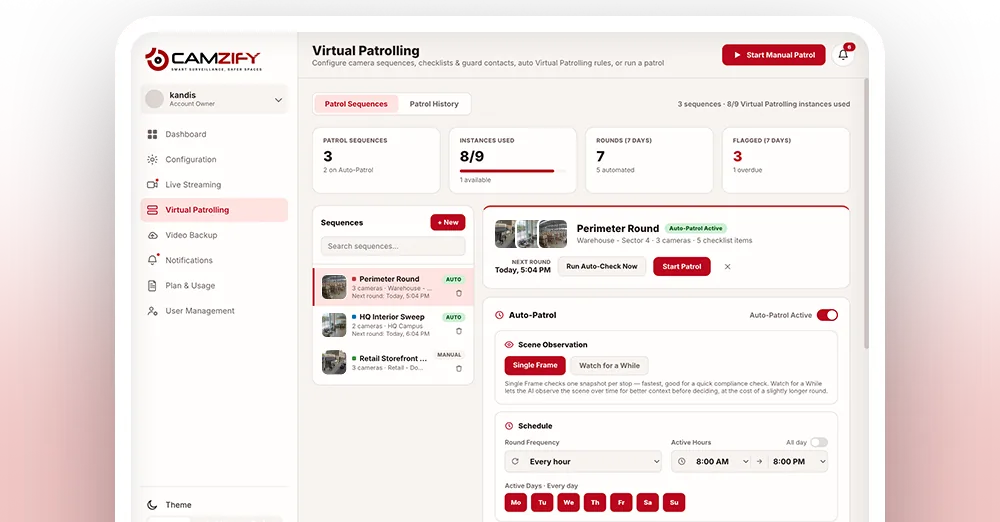
A virtual patrolling system runs scheduled, AI-driven patrol rounds across the cameras a site already has — following a defined route, checking a per-camera checklist at each stop, notifying the guard responsible when something fails, and filing a timestamped compliance report with the frame behind every result. Some buyers call it a virtual guard. It produces the same record a physical guard tour does, without a person walking it, and identical at 03:00 and 15:00.
- Manual or automated
- Evidence on every check
- Runs on existing cameras
Run a patrol round in 20 seconds
Step through three cameras and mark each item. Fail one and you will be asked whether to message the guard — and the round will not let you move on until the item is fixed and re-checked, or held as pending with a reason. That rule is the whole product in miniature.
Read the full walkthrough
Every item needs an answer before the round can move on. A failed item is either fixed and re-checked, or held as pending with a reason.
Step through three cameras, mark each checklist item, message the guard when one fails, and see the report the round produces.
Eight parts, every round, in this order
Whether started by an operator or by the schedule, a round is the same sequence of parts. Each has its own page.
Manual round, or Auto-Patrol
Same sequence, same checklists, same report. The difference is who makes each judgment and when the round happens.
Manual round
An operator steps camera to camera and answers each checklist item against the live view. A failed item offers the guard message and then has to be resolved before the round can end. Right for ad-hoc inspections and for verifying an incident response.
- Operator judges each stop in real time
- No item can be skipped or left failing
- Guard message offered on every failure
Auto-Patrol
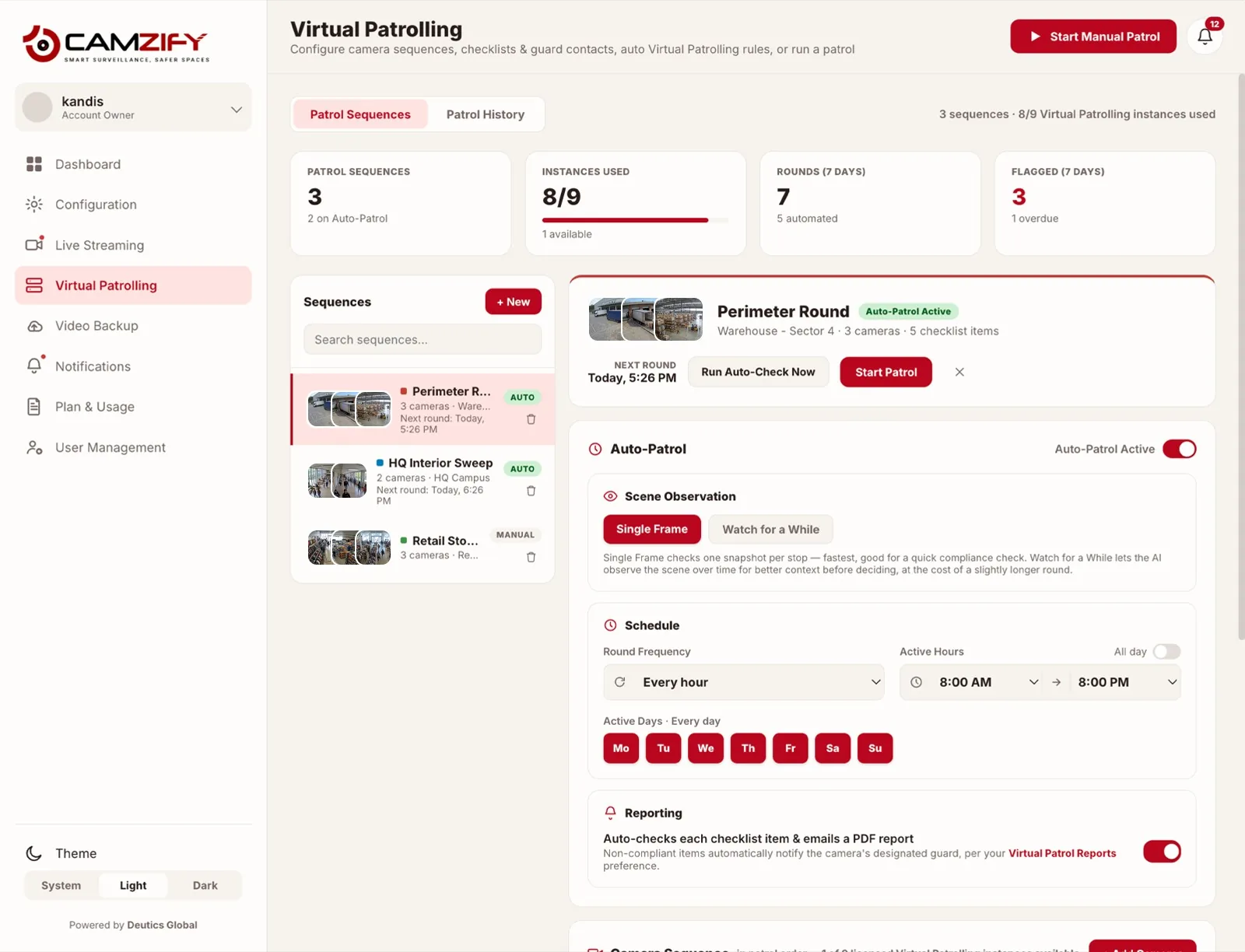
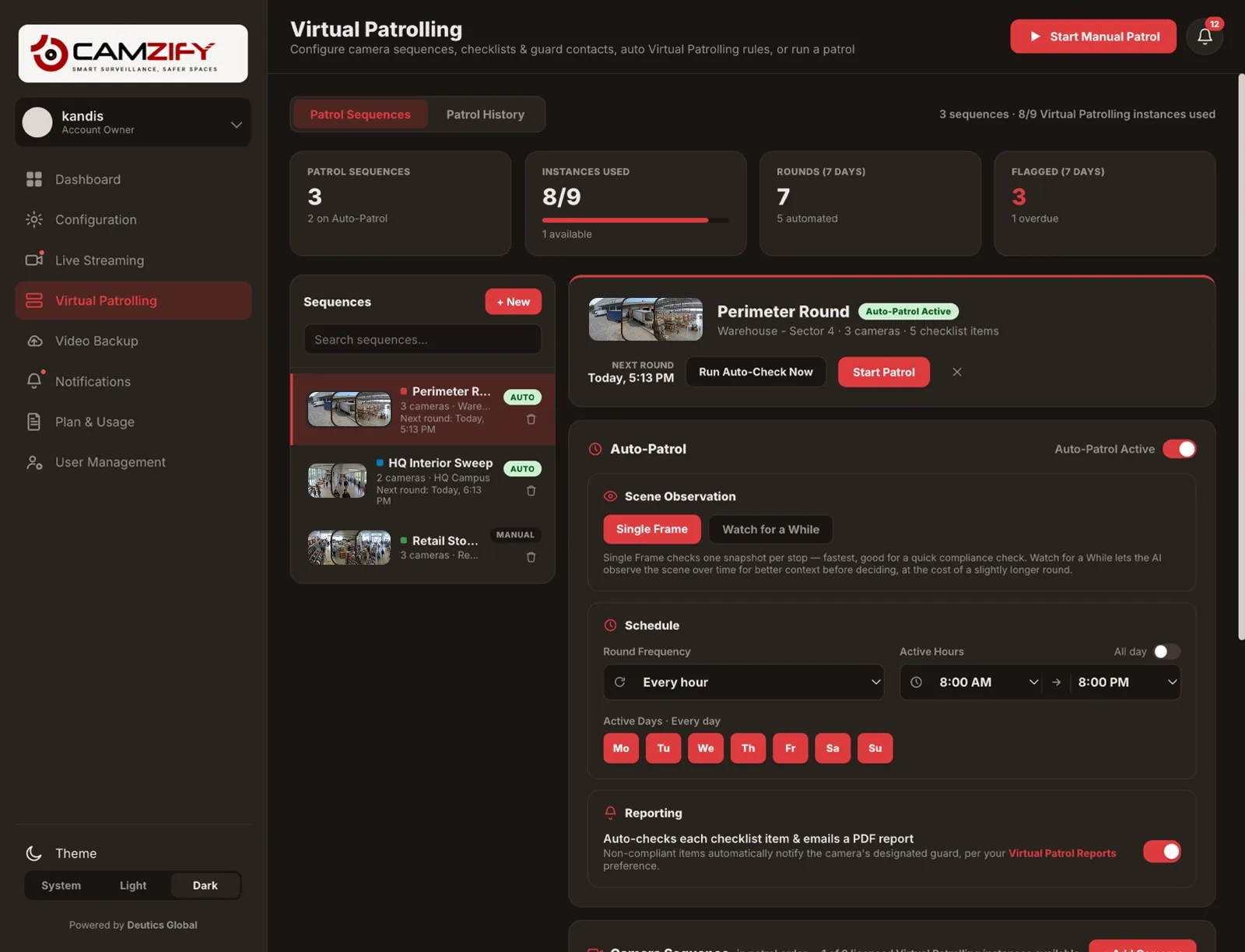
RecommendedScheduled rounds by frequency, active hours and active days, unattended. The AI judges each stop from a frame or a few seconds of video, records its reasoning, flags risks beyond the checklist, notifies guards on its own, and files the report.
- Runs on schedule with nobody on shift
- Scene observation for stops that need context
- Safety and security risks assessed at every stop
Proof, not a promise
Insurers, auditors and clients want evidence that patrols happened, that every checkpoint was checked, and that failures were acted on. Every round files a report carrying the snapshot behind each check and both frames on anything fixed.
The patrol log keeps every round as Completed, Flagged or Overdue with its compliance percentage, and compliance tracking rolls that up per site so one number says whether coverage is holding.
Against a guard tour and against plain CCTV
Guard-tour figures are order-of-magnitude industry estimates; Camzify is quoted per camera. If the term you know is virtual guard, that page defines it.
| Capability | Camzify Virtual Patrolling | Manned Guard Tours | Traditional CCTV |
|---|---|---|---|
| 24/7 coverage without shift changes | |||
| Per-camera compliance checklist | |||
| Assigned guard per check point | |||
| Report with the frame behind every check | |||
| Timestamped audit trail | Partial | ||
| Compliance % scoring | |||
| Risks flagged beyond the checklist | |||
| Scales across multiple sites | Partial | ||
| Zero fatigue or human error | |||
| Cost per site per month | Quoted per camera | $3,000–$8,000 | $50–$200 |
Industries using virtual patrolling
Virtual patrolling, answered
Ready to patrol your site 24/7?
Book a 15-minute demo and see a live patrol run on your own cameras.