

Fire & smoke detection
Catch smoke before it's a fire. Fire and smoke detection watches live camera feeds for visible flame and smoke, often flagging an event before it reaches a fixed heat or particle sensor.
- Visible flame anywhere in the camera's field of view
- Visible smoke developing in storage, electrical, or…
- Early-stage events in large or open spaces before a fixed…
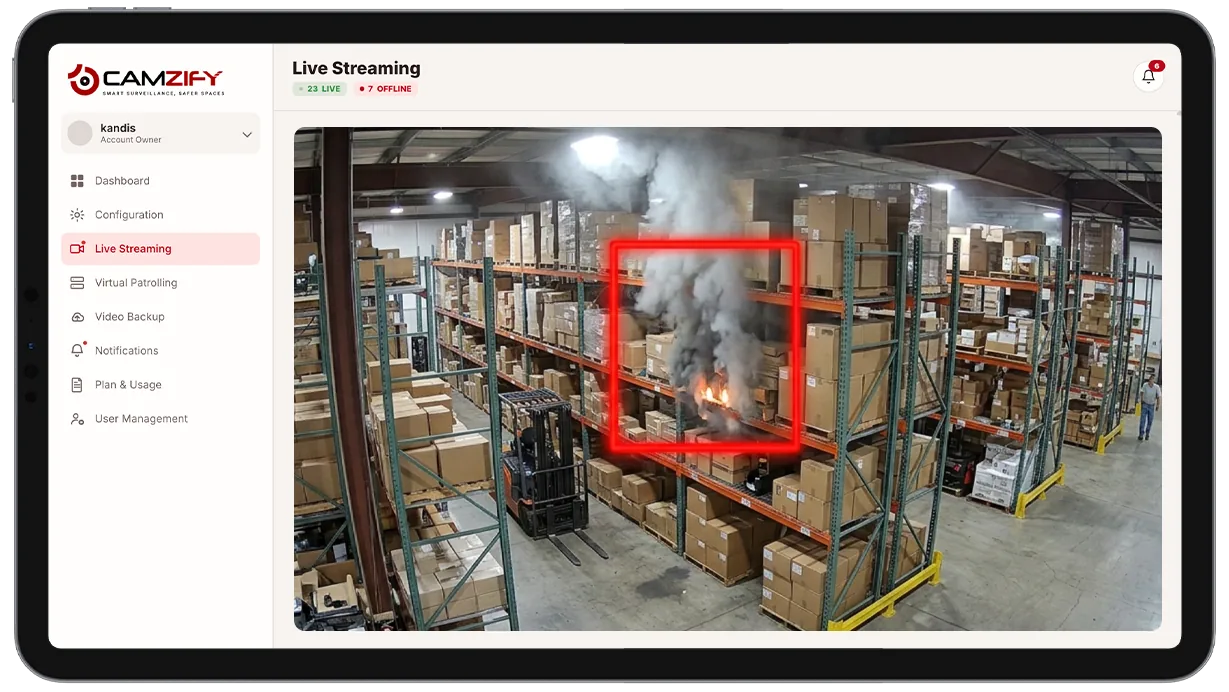
This capability detects and alerts on:
- • Visible flame anywhere in the camera's field of view
- • Visible smoke developing in storage, electrical, or industrial areas
- • Early-stage events in large or open spaces before a fixed sensor triggers
- • Smoke or flame in unattended areas overnight or on weekends
- • Multiple simultaneous smoke sources indicating a fast-developing event
- • Immediate, critical-severity alert routing to on-site staff
Why fire and smoke detection matters
Fixed heat and particle sensors only trigger once smoke or heat physically reaches the sensor location. In a large warehouse with high ceilings, an open yard, or a space with strong airflow, that can take long enough for a fire to become well established before the alarm sounds, the sensor is, by design, always reacting after the fact.
The legacy backstop for that gap is staff simply noticing, someone smelling smoke or spotting flame and raising the alarm manually. That works during busy hours with people on the floor. It does not work overnight, in unattended buildings, or in areas with infrequent foot traffic, which is exactly when an undetected fire has the most time to spread before anyone responds.
Visual detection watches the space itself rather than waiting for smoke to travel to a fixed point, so it can flag flame or smoke as soon as it is visible in frame, independent of ceiling height, airflow, or whether anyone happens to be nearby. It runs continuously, which is the part a human observer or a periodically-checked sensor cannot guarantee.
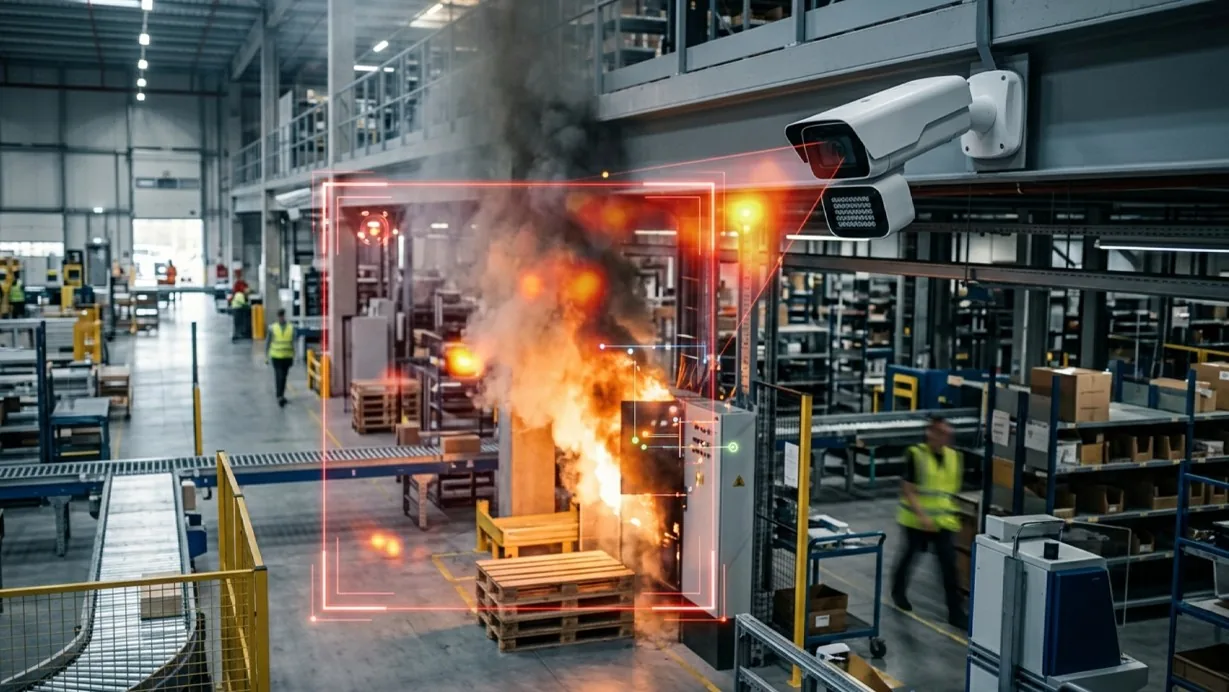
How it works
Reading the visual signature
The model analyzes each camera's live feed for the visual signatures of flame and smoke, color, texture, and motion patterns distinct from ordinary movement in the scene. A confirmed match above the confidence threshold fires an alert immediately.
Filtering false triggers
Steam, dust, and fog can visually resemble smoke at a glance, so the model is trained to separate their distinct color, texture, and motion characteristics from an actual smoke or flame event before an alert fires.
Critical alert routing
Every alert is tagged critical severity by default and includes a clip, confidence score, and timestamp so the reviewing team can confirm and escalate to emergency response without delay. Alerts route through the platform's notification system with escalation rules configurable per site.
Configuration
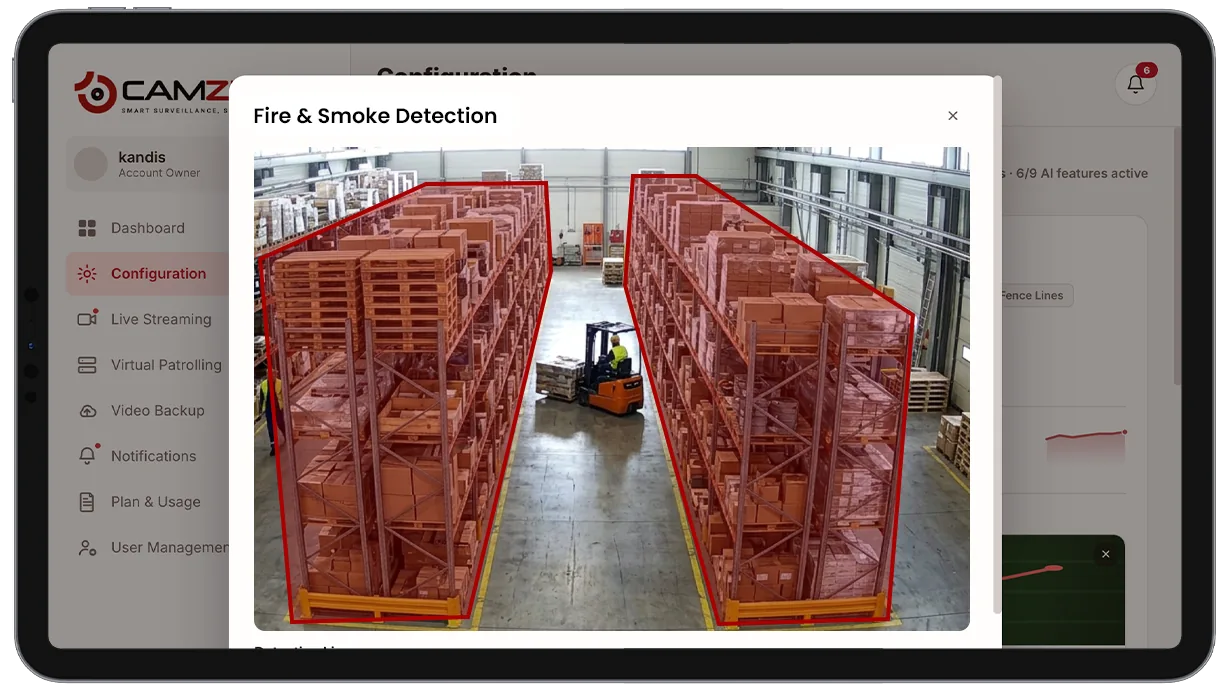
Fire and smoke detection is enabled per camera with default critical-severity alerting. Configurable options include:
- • Default critical-severity alerting per camera
- • Continuous monitoring with no schedule restriction by default
- • Optional schedule restriction for sites that want one
- • Escalation rules per site, e.g. who is notified first
- • Per-camera instance licensing
Common scenarios
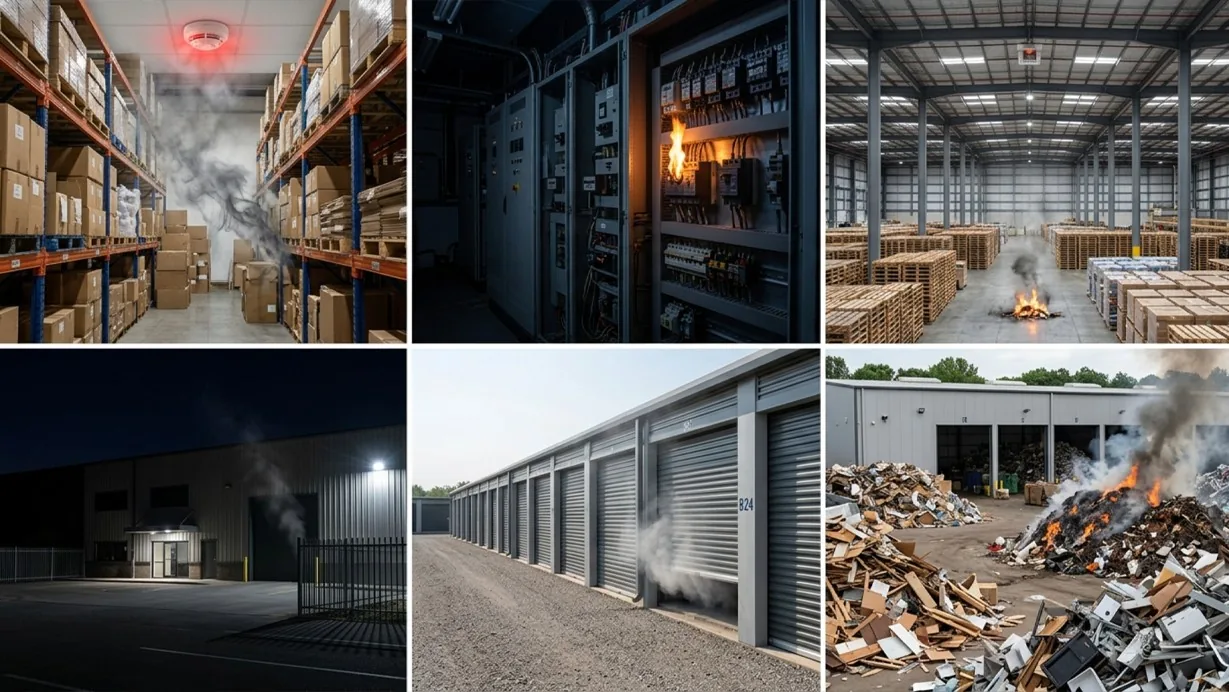
- • A storage area with racked combustible materials where smoke in an aisle triggers an immediate alert
- • An electrical room where any visible flame is treated as critical regardless of time of day
- • A large, high-ceilinged warehouse where a fixed heat sensor sits far from where a fire could start
- • An unattended facility overnight, when no staff are present to notice smoke directly
- • A self-storage site with many separate units and limited continuous foot traffic
- • An outdoor waste or recycling yard where a fire could develop before it reaches an indoor sensor
In a patrol round
Fire and smoke detection runs continuously rather than only during scheduled checks, but an event during an active virtual patrol round is logged immediately as a critical non-compliance event in the patrol report.
Industries using this
Related detections
Frequently asked questions
Ready to patrol your site 24/7?
Book a 15-minute demo and see a live patrol run on your own cameras.