

AI surveillance for parking lot security cameras
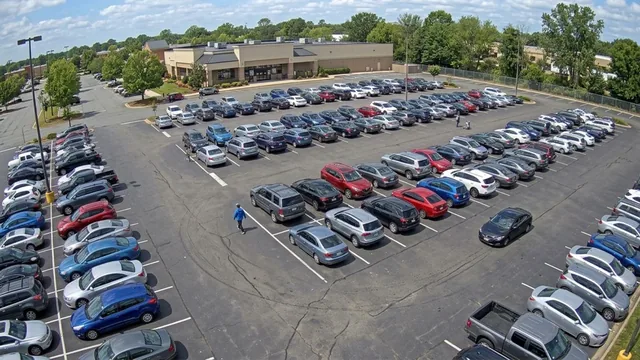
Parking lot surveillance is the monitoring of outdoor vehicle areas for people present after hours, vehicles in fire lanes or restricted bays, and activity between parked cars that should not be happening. A lot is large, unevenly lit and generates more footage than anyone will review, which makes it the most common blind spot on a commercial site. Camzify tracks people and vehicles as objects on the existing cameras, notifies within the hours you set, and checks the lot on a patrol round.
- People and vehicles tracked as objects
- Fire lanes and restricted bays as rules
- Lot checked and recorded on the round
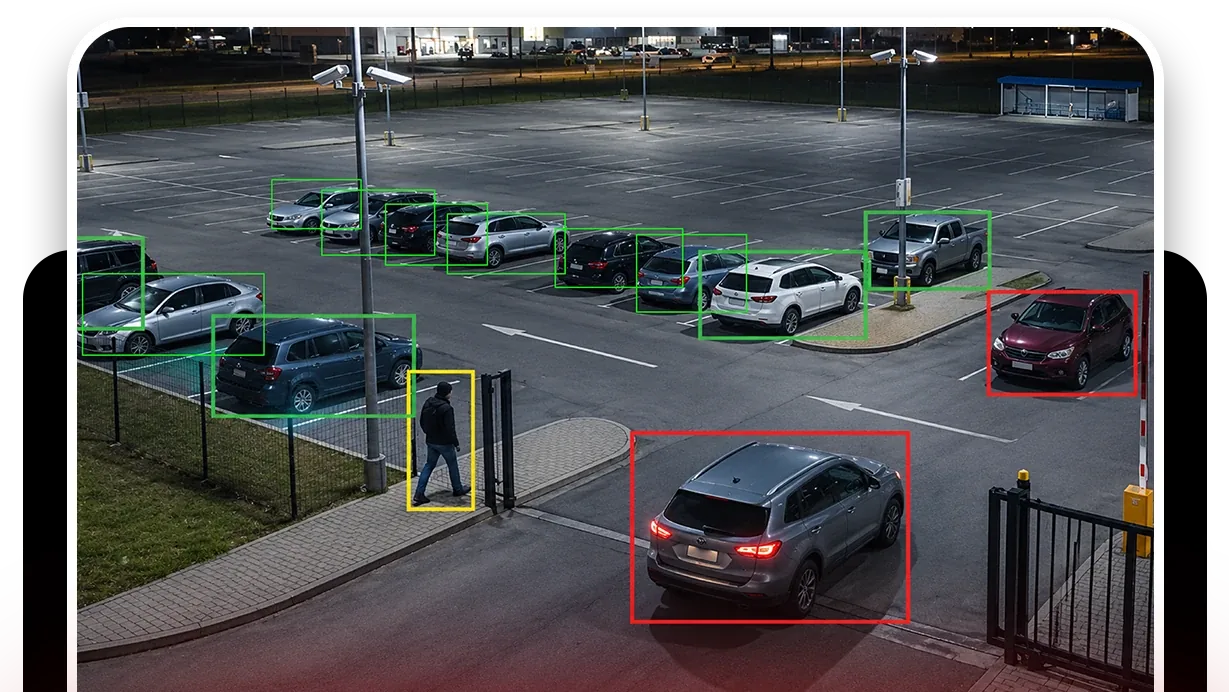
Too much footage from a place nobody walks
Lots are hard to patrol on foot and easy to cover with cameras, which produces the worst combination: complete recording and no attention. Break-ins, damage, overnight parking and people who should not be there are found by whoever arrives first in the morning, and the footage is reviewed to write the report.
Motion-based alarms are hopeless on a lot; every vehicle, every headlight sweep and every gust of wind is motion. The signal is a tracked person after hours, or a tracked vehicle in the wrong place for too long.
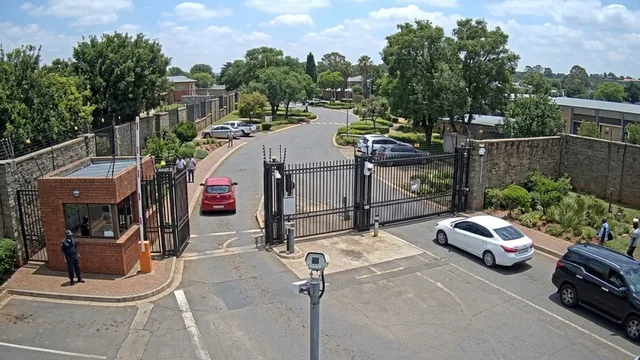
- 01CAM 01Main gate2 checks
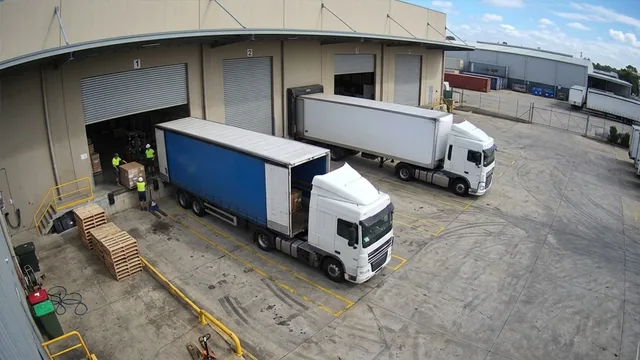
- 02CAM 04Loading dock2 checks
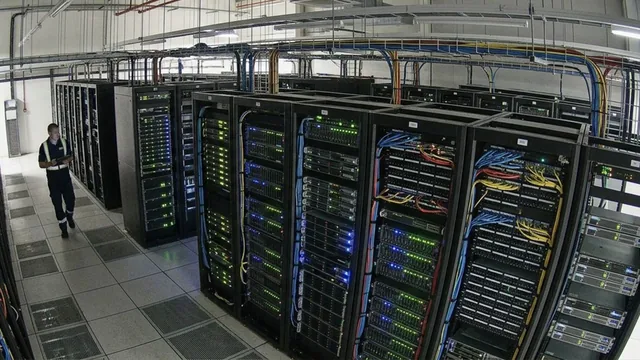
- 03CAM 09Server room2 checks
- 04CAM 02Parking lot A1 checks
Rules for people, rules for vehicles
Zone intrusion detection covers the person case: the lot, or parts of it, as zones with a notification window, so a tracked person walking between parked cars at 2am raises an alert with the snapshot and one at 2pm does not. Illegal parking detection covers the vehicle case: a fire lane, a disabled bay or a restricted area where a vehicle stopped beyond the allowed time is the event. Wrong-way vehicle detection fires on a vehicle moving against a lane.
A patrol round checks the lot on a schedule, no person present, fire lanes clear, restricted bays empty, gates secured, and records each answer with the frame. When something is reported the next morning, the detection log and the round reports are already the timeline. The same counts, read as a trend, are occupancy monitoring.
Zone intrusion detection
The lot as zones with a notification window. A tracked person after hours is the event.
DetectionIllegal parking detection
A vehicle stopped in a fire lane or restricted bay beyond the time allowed.
DetectionWrong-way vehicle detection
A vehicle moving against the defined direction of an aisle or ramp.
DetectionMulti-object tracking
People and vehicles followed as separate classes, so each rule fires on the right one.
- No person in the lot after hoursCompliant
- Fire lane clearNot compliant
- Restricted bays emptyCompliant
- Entrance barrier downCompliant
A failed item is resolved as Fixed or Pending before the round can close.
What a lot round checks
A lot sequence is the cameras in driving order, entrance, aisles, fire lane, restricted area, exit, and its checklist is the state each should be in at that hour. After hours the items are simple: nobody present, lanes clear, bays empty, barrier down. The report per round records the lot was checked and found so at each time.
The lot round is a common addition to the after-hours sequence for the building, as its first and last stops.
A check found Not Compliant captures a snapshot and messages the guard designated for that camera; on a manual round the operator chooses to send it, on an automated round it goes on its own. The item stays Pending until it is marked Fixed, which captures the after frame, and the report shows both.
What it will not do
It will not read plates or match vehicles to a permit list. It will not identify people. It will not see a corner without a camera or through a camera that has gone dark. And it will not move the car from the fire lane; it tells the person designated for that camera and keeps the frame.
We do not publish detection rates for lots, because lighting and camera placement vary too much to give one honestly. The trust page sets out the policy.
Industries where this applies
Frequently asked questions
Ready to patrol your site 24/7?
Book a 15-minute demo and see a live patrol run on your own cameras.