

PPE compliance monitoring
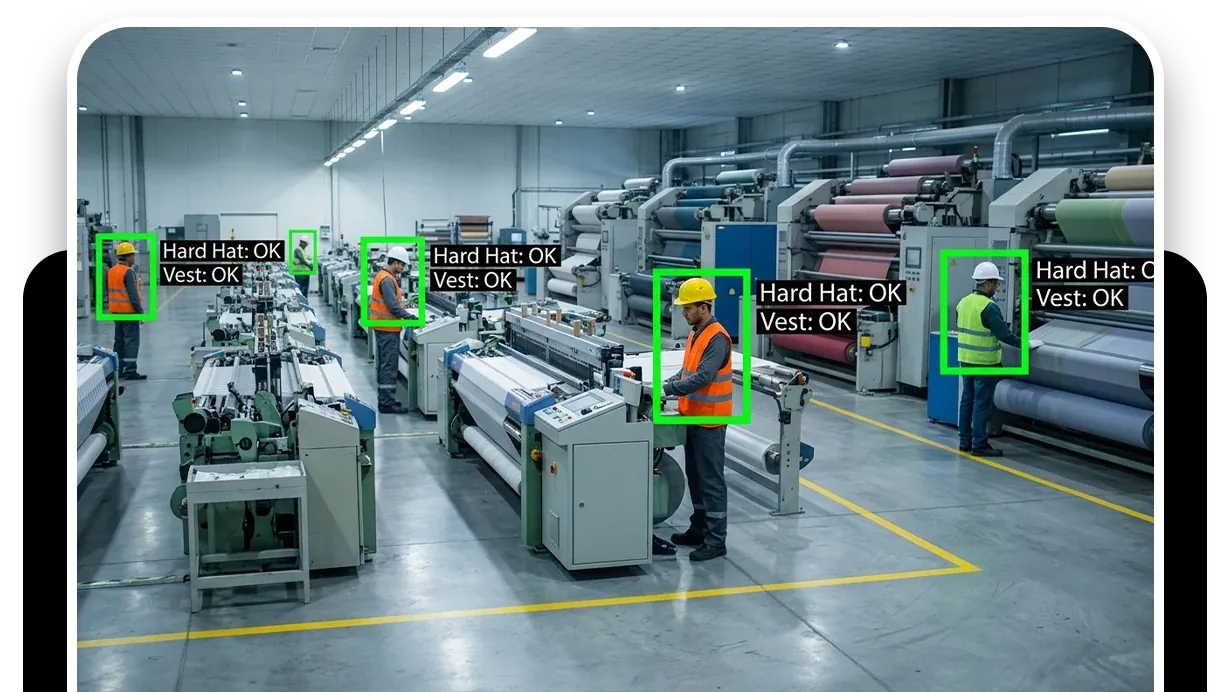
PPE compliance monitoring is the continuous check of every person in a camera's view against the protective equipment required in that area: hard hat, high-visibility vest, gloves. A safety officer sees a fraction of the floor for a fraction of the shift. Camzify checks each confirmed person against the policy set for that camera or zone, produces a clip per violation, and can add the check to the patrol round so the site is recorded as compliant at each time.
- Hats, vests and gloves against a per-zone policy
- A clip and confidence score per violation
- Compliance recorded on the round
The policy is on the wall. Compliance is not.
Every site has the sign at the gate and a policy in the induction pack, and compliance is whatever the safety officer happens to see while walking the floor. A hard hat comes off in the heat, a vest is left in the cab, and the record says the site was compliant because nobody wrote down that it was not.
After an injury the question is what the site looked like at that hour, and the answer is usually a recollection. The cameras saw it. They were not asked.
- Completed
- Flagged
- Overdue
Every person in frame, checked against the zone
PPE violation detection checks each confirmed person in the camera view against the equipment required for that camera or zone and raises an alert with a clip and a confidence score when something required is missing. The check is weighed over the person's track rather than one frame, so a hat hidden for a second behind a rack is not a violation. The policy is per zone, so the dock and the office beside it carry different requirements on the same account.
Add the check to a patrol round and the site is recorded as compliant, or not, at each stop and each time, with the frame. That is the record an inspector or an insurer asks for after an incident, and it exists before anyone asks. Slip and fall detection on the same cameras covers the injury itself, and the workplace safety page covers falls, exits and exclusion zones together.
PPE violation detection
Hard hats, high-visibility vests and gloves checked per person against the zone policy.
DetectionSlip and fall detection
A fall raised in real time with a clip, routed to the nearest guard.
DetectionZone intrusion detection
A person in an exclusion zone, a crane radius or a plant area, notified during the hours you set.
DetectionMulti-object tracking
The track each person is followed on, so a check is made over time rather than on one frame.
- All persons in hard hatsNot compliant
- High-visibility vests wornCompliant
- Exclusion zone clearCompliant
- Walkway unobstructedCompliant
A failed item is resolved as Fixed or Pending before the round can close.
What a safety round checks
A safety sequence is the cameras on the working areas in order, and its checklist mixes equipment and conditions: everyone in hats, vests on, exclusion zone clear, walkways unobstructed, extinguisher points accessible. Run at the start of each shift and mid-shift, it produces a report per round that shows the site as it was, with frames, which is worth more in a review than a signed checklist.
Where the round is automated, the AI also raises a critical notification for a safety risk it sees that the checklist did not ask about.
A check found Not Compliant captures a snapshot and messages the guard designated for that camera; on a manual round the operator chooses to send it, on an automated round it goes on its own. The item stays Pending until it is marked Fixed, which captures the after frame, and the report shows both.
What it will not do
It will not check equipment it is not built for: harnesses, eye protection and respirators are not claimed. It will not identify the person; the clip shows what a supervisor would see and no more. It will not see a person the camera cannot see, or a hat under a hood the camera cannot resolve. And it does not decide the consequence; that stays with your safety process.
We do not publish detection accuracy or injury-reduction figures. The trust page sets out why.
Industries where this applies
Frequently asked questions
Ready to patrol your site 24/7?
Book a 15-minute demo and see a live patrol run on your own cameras.